Recent Articles
12th June 2025 |
Every year on May 28, the world comes together to recognize the International Day of Action for Women’s Health, a day that doubles as Menstrual Hygiene Day. It is a powerful reminder that women’s health—especially menstrual health—is a fundamental human right and not a privilege. Yet for millions of girls, women, and people who menstruate, this natural bodily function remains shrouded in stigma, shame, and silence.
The date is symbolic: May (the 5th month) represents the average 5-day duration of menstruation. And the 28th? That’s the average number of days in a menstrual cycle. Together, the numbers remind us of the rhythm of a cycle that half the world experiences for a significant portion of their lives.
Despite decades of progress in gender equality and healthcare, many menstruators still deal with shame, discomfort, and even danger because of it. Here’s a quick reality check:
And all of this doesn’t just affect hygiene—it affects education, economic participation, mental health, and overall wellbeing.
Menstrual health intersects with broader issues of reproductive rights, bodily autonomy, and gender equality. Poor menstrual hygiene can lead to infections, reproductive tract issues, and missed opportunities in school or work. This is not just a women’s issue—it’s a societal issue. Ensuring safe, hygienic, and stigma-free menstruation is essential to achieving gender equity and empowering communities.
Discover how AVIT is different. The college stands out with hands-on learning, industry mentors, and future-ready tech. The B.E. CSE (Cyber Security) programme at AVIT is offered in collaboration with global tech giants like Intel, NEC, HCLTech, and XTIC of IIT Madras.
Here’s how we move forward, together:
Menstrual Hygiene Day isn’t just about periods—it’s about dignity, equity, health, and respect. It’s a reminder that everyone deserves to manage their menstruation safely, with confidence, and without shame.
Let’s use this day as more than just a commemoration—let’s make it a commitment. Because a healthy period should be a reality for everyone, everywhere. It should be a right, not a privilege.
By:
Mrs. Subathra M,
Assistant Professor,
Department of Department of Biotechnology,
Aarupadai Veedu Institute of Technology (AVIT),
Vinayaka Mission’s Research Foundation (Deemed to be University),
Chennai
10th October 2025 |
When was the last time you checked your mental health, the same way you check your phone battery or your health after a fever? Most of us don’t even realize how much our mind goes through every single day. We brush it off, saying:
But pause for a moment. What if we treated mental health like physical health?
If you had a toothache, you’d go to a dentist. If you had a fever, you’d rest and see a doctor. But when your heart feels heavy or your thoughts feel too loud, what do you do? You smile and say, “I’m fine.” That’s where the change needs to begin.
Your mind is your control room. It affects how you think, feel, act, and even how your body functions. When your mental health struggles, everything else your sleep, appetite, relationships, and confidence – starts to feel off balance.
Let’s take a simple example:
You wake up late one morning, spill your coffee, rush to work, and someone criticizes you. By noon, you’re irritated. You skip lunch, work late, and go home exhausted.
Now imagine this happening not just once, but every day. Your body can handle tiredness, but your mind slowly starts to say, “I can’t anymore.” And that’s how burnout begins quietly, gradually.
Talking about mental health isn’t weakness. It’s human. Simple acts like listening without judgment, giving a hug, or just being there can make a world of difference. For instance:
Each of these is a step toward better mental health.
World Mental Health Day isn’t about pretending to be happy. It’s about being honest about how you feel and taking one small step toward caring for your mind every single day.
Because, your mental health matters just as much as your physical health… maybe even more.
By:
Ms. Saranya Ganesan (Ph.D.)
Medical Psychologist & Student Counselor,
VMRF Chennai Campus
9th June 2025 |
Absolutely! India is one of the fastest-evolving cybersecurity markets in the world. According to NASSCOM and Data Security Council of India (DSCI) report, the country will need over 1 million cybersecurity professionals by 2026 to meet rising industry demands. Imagine the scale of growth a decade from now!
This surge is driven by:
So, if you’re considering a career in cybersecurity, now is the perfect time to start. The industry offers diverse job roles, competitive salaries, and global opportunities.

Discover how AVIT is different. The college stands out with hands-on learning, industry mentors, and future-ready tech. The B.E. CSE (Cyber Security) programme at AVIT is offered in collaboration with global tech giants like Intel, NEC, HCLTech, and XTIC of IIT Madras.
Apply now and step into one of the world’s most in-demand professions.
https://www.avit.ac.in/
5th June 2025 |
We all know that cyberattacks are no longer rare today. They’re happening on a daily basis, from personal data theft to massive corporate breaches.
That’s exactly why cybersecurity has become an essential field and not optional. With threats like phishing, ransomware, and data leaks on the rise, there’s a huge demand for professionals who can keep the digital world safe.
If you’re considering a B.E. in Computer Science and Engineering (Cyber Security), let us unravel its top career options after engineering.
AVIT’s VEmerge+ industry-integrated programme is designed to equip students with the right skillset, exposure, and confidence. What makes it stand out:
3rd June 2025 |
A carbon-neutral neighborhood is a community that produces as much clean energy as it consumes, achieving net-zero carbon emissions. This is done by combining energy efficiency, renewable energy sources, and smart energy management systems. These neighborhoods are foundational to future smart cities focused on sustainability.
Electrical engineers are key to designing, integrating, and managing the systems that make carbon-neutral living possible. Here’s how:
1. Renewable Energy Integration
Example: Designing a net-metered solar system that allows excess energy to flow back into the grid.
2. Smart Grids & Microgrids
EE Focus: Load balancing, inverter control, fault protection, and energy routing.
3. Energy Storage Systems
Importance: Ensures 24/7 availability of clean energy, especially when generation is variable (e.g., at night).
4. Energy-Efficient Building Systems
Goal: Reduce the total electrical load of the neighborhood.
5. Electric Mobility & EV Infrastructure
Relevance: Supports low-carbon transport, further reducing emissions.
6. IoT and Energy Monitoring
Output: Dashboards for residents and city planners to track carbon impact.
One of the world’s largest carbon-neutral neighborhoods:
By:
Ms.Vanitha R,
Assistant Professor(GR II),
Department of Electrical and Electronics Engineering,
Aarupadai Veedu Institute of Technology (AVIT),
Vinayaka Mission’s Research Foundation (Deemed to be University),
Chennai
2nd June 2025 |
The Sustainable Development Goals (SDGs), established by the United Nations in 2015, provide a global blueprint for peace, prosperity, and environmental protection by 2030. Comprising 17 interconnected goals, the SDGs aim to address critical global challenges—including poverty, inequality, climate change, and sustainability—through coordinated efforts from governments, organizations, and individuals. Clean and green energy plays a vital role in achieving the UN Sustainable Development Goals (SDGs), especially Goal 7: Affordable and Clean Energy, and Goal 13: Climate Action. Promoting renewable energy sources supports environmental sustainability, reduces carbon emissions, and ensures a healthier planet for current and future generations.
Clean and green energy refers to power generated from renewable, sustainable sources that have minimal impact on the environment. These include solar, wind, hydro, and geothermal energy, which produce little or no greenhouse gas emissions compared to fossil fuels. Embracing clean energy is essential for combating climate change, improving air quality, and reducing our dependence on finite resources. Technological advancements and policy support are driving the global transition toward greener energy solutions. Investing in clean energy not only protects the planet but also fosters economic growth, job creation, and energy security, paving the way for a more sustainable future.
The clean energy sector is experiencing unprecedented growth, driven by technological advancements, supportive policies, and increasing investments. In 2023, global investment in clean technology manufacturing rose by 50%, reaching USD 235 billion, with significant contributions from solar PV and battery manufacturing. This surge is not only transforming energy systems but also creating economic opportunities and enhancing energy security worldwide.
The global shift toward sustainability has accelerated innovation in clean and green energy technologies. As climate concerns intensify, recent trends reveal a growing focus on renewable integration and smart energy solutions. Driven by policy, investment, and public demand, the energy sector is embracing transformative green technologies and practices.
India is advancing rapidly in clean energy. The Indian Institute of Petroleum and Energy (IIPE) and Magnivia Ventures are setting up a research park focused on green hydrogen, battery materials, and carbon capture. Major firms like Reliance and Adani are investing heavily to lead in renewable energy and green hydrogen globally.
The transition to clean and green energy is not just an environmental imperative but also an economic and social opportunity. By embracing innovative technologies and sustainable practices, we can achieve a resilient, low-carbon future that aligns with global climate goals and ensures energy access for all.
By:
Geethi Peethambaran,
Assistant Professor ( Grade I),
Department of Electrical and Electronics Engineering,
Aarupadai Veedu Institute of Technology (AVIT),
Vinayaka Mission’s Research Foundation (Deemed to be University),
Chennai
2nd June 2025 |
In today’s rapidly evolving technological landscape, the demand for skilled professionals in cutting-edge domains like Artificial Intelligence and Machine Learning (AI/ML), Cybersecurity, and the Internet of Things (IoT) has skyrocketed. To bridge the gap between academia and industry, INTEL-NEC has pioneered Industry Integrated Programmes designed to equip students with both theoretical knowledge and practical expertise in these key specializations.
These programmes not only foster deep technical understanding but also ensure students gain hands-on experience through real-world projects, internships, and collaborations with leading tech companies. This blog explores the three core specializations offered by INTEL-NEC—AI/ML, Cybersecurity, and IoT—highlighting their importance, curriculum structure, and career opportunities.
Traditional education systems often focus heavily on theoretical concepts, which may not be sufficient to prepare students for the fast-paced demands of the tech industry. Industry Integrated Programmes are designed to:
INTEL-NEC’s programmes embody these principles, creating a platform where students can thrive in emerging technology fields.
The Growing Importance of AI/ML
AI and Machine Learning are revolutionizing how businesses operate, automate, and innovate. From voice assistants and recommendation engines to predictive analytics and autonomous vehicles, AI/ML technologies permeate numerous sectors.
Curriculum Overview
The AI/ML specialization at INTEL-NEC covers:
Industry Collaboration and Projects
Students work on projects such as image classification, chatbot development, and predictive analytics using real datasets. Collaborations with AI startups and research labs provide internship opportunities to apply learning in production environments.
Career Opportunities
Graduates can pursue roles like Data Scientist, ML Engineer, AI Researcher, and AI Product Manager across industries including healthcare, finance, e-commerce, and automotive.
The Critical Need for Cybersecurity Experts
With the surge in cyber threats—ransomware attacks, data breaches, and identity theft—robust cybersecurity measures are vital for protecting information assets. Cybersecurity professionals are in high demand globally to defend systems, networks, and data.
Curriculum Overview
The Cybersecurity track includes:
Industry Collaboration and Labs
INTEL-NEC offers virtual labs and cyber ranges where students practice ethical hacking and defense tactics. Partnerships with cybersecurity firms facilitate workshops and internships focused on real-time threat analysis and response.
Career Opportunities
Career paths include Security Analyst, Ethical Hacker, Security Consultant, Forensic Analyst, and Chief Information Security Officer (CISO), with roles in sectors like finance, government, healthcare, and tech companies.
The Expanding World of IoT
IoT connects billions of devices—smart homes, industrial sensors, wearable tech—creating an interconnected ecosystem that generates massive data streams and automation opportunities. Mastery of IoT technology is crucial for building smart, efficient systems.
Curriculum Overview
The IoT specialization covers:
Industry Collaboration and Projects
Students design and deploy IoT prototypes such as smart agriculture sensors, home automation systems, and predictive maintenance solutions. Industry tie-ups enable field internships with IoT solution providers and manufacturing units.
Career Opportunities
IoT specialists can become IoT Engineers, Embedded Systems Developers, Cloud IoT Architects, or IoT Security Analysts, working in manufacturing, smart cities, healthcare, and automotive sectors.
INTEL-NEC combines academic rigour with practical exposure by:
Mentorship and Career Guidance: Support from seasoned professionals to navigate the job market.
The convergence of AI/ML, Cybersecurity, and IoT is shaping the future of technology. Professionals skilled in these areas are vital in building secure, intelligent, and connected systems that power the digital economy.
INTEL-NEC’s Industry Integrated Programmes empower students to not only learn but also to apply knowledge in real-world scenarios, making them competitive candidates for top-tier tech roles. For students and professionals eager to excel in tomorrow’s tech landscape, enrolling in these specialized programmes offers a robust foundation and a launchpad for a rewarding career.
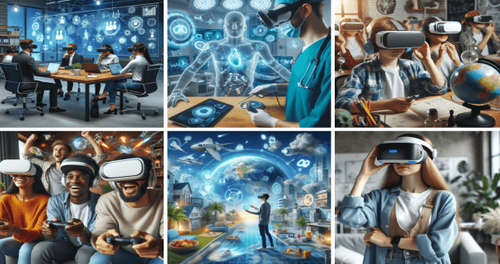
With technology advancing at an unprecedented pace, bridging the gap between education and industry is essential. INTEL-NEC’s Industry Integrated Programmes in AI/ML, Cybersecurity, and IoT provide comprehensive training, hands-on experience, and industry exposure, preparing learners for the challenges and opportunities ahead. If you’re passionate about cutting-edge technology and want to be part of the digital revolution, explore INTEL-NEC’s programmes and take a decisive step towards your future in tech.
By:
Mr. S. SIMONTHOMAS,
Assistant Professor & INTEL-NEC Coordinator,
Department of Computer Science and Engineering,
Aarupadai Veedu Institute of Technology (AVIT),
Vinayaka Mission’s Research Foundation (Deemed to be University),
Chennai
31st May 2025 |
Artificial Intelligence (AI) has become an integral part of our daily lives — powering everything from personalized recommendations on streaming platforms to medical diagnostics and smart assistants. These AI systems rely heavily on data, which is often personal and sensitive. However, traditional AI models require centralizing data on servers, raising serious concerns about privacy, data security, and compliance with regulations like GDPR and CCPA.
To address these challenges, the AI community has introduced an innovative approach called Federated Learning (FL). Federated Learning enables AI models to learn from decentralized data, offering a powerful way to preserve privacy while harnessing the benefits of machine learning.
Federated Learning is a decentralized machine learning technique where multiple devices or institutions collaboratively train a shared AI model without exchanging their raw data. Instead, each participant keeps its data locally and only sends model updates (such as weight changes or gradients) to a central server. The server aggregates these updates to improve the global model, which is then sent back to all participants for further local training.
In essence, FL moves the model to the data, rather than moving data to the model. This concept allows AI to be trained on diverse and private datasets without compromising confidentiality.
Privacy Preservation
Since raw data never leaves its original location, federated learning drastically reduces the risk of data breaches and misuse. This approach aligns perfectly with privacy laws and user expectations, making it easier for organizations to comply with data protection regulations.
Collaboration Without Compromise
FL enables multiple parties — like hospitals, banks, or mobile devices — to collaboratively improve AI models by leveraging data that they cannot share openly. This collaborative learning leads to better models without exposing sensitive information.
Efficiency and Reduced Latency
Processing data locally minimizes bandwidth use and reduces latency, making it ideal for devices like smartphones or IoT sensors. This allows real-time personalization and faster AI responses.
Real-World Applications of Federated Learning
While federated learning offers promising benefits, it also faces certain challenges:
Researchers are actively working on solutions such as model compression, secure aggregation protocols, and adaptive training strategies to address these challenges.
As data privacy regulations become stricter and users grow more aware of their rights, federated learning is poised to become a foundational technology for AI development. Combining FL with techniques like differential privacy, homomorphic encryption, and secure multiparty computation will further strengthen privacy guarantees.
Moreover, federated learning can unlock new collaborations across industries, enabling shared AI insights without sacrificing data ownership or privacy. Whether it’s in healthcare, finance, or edge computing, FL is helping build AI systems that are not only powerful but also ethical and secure.
Federated Learning represents a transformative shift in how AI models are trained, moving from centralized data collection to decentralized, privacy-preserving collaboration. By allowing AI to learn from data without exposing it, FL balances the growing demand for intelligent systems with the essential need to protect user privacy. For organizations and developers aiming to innovate responsibly, federated learning offers a practical, forward-looking path that respects both the power of AI and the rights of individuals.
By:
Mr. S. SIMONTHOMAS,
Assistant Professor,
Department of Computer Science and Engineering,
Aarupadai Veedu Institute of Technology (AVIT),
Vinayaka Mission’s Research Foundation (Deemed to be University),
Chennai
30th May 2025 |
The fourth industrial revolution, Industry 4.0, is transforming conventional manufacturing and industrial practices through smart technologies such as the Internet of Things (IoT), cloud computing, and artificial intelligence (AI). Predictive maintenance (PdM) is among the most effective uses of AI in these areas – with the use of algorithms to foresee upcoming failures, avoid lost time and expenditure, and overall performance optimisation.
Predictive maintenance utilizes real-time information from sensors, machines, and systems in operation to anticipate when a machine or part may fail. Whereas reactive maintenance (repairing machines after they fail) and preventive maintenance (performing maintenance on machines even if it isn’t due) both involve actions that are not scheduled based on the actual condition of the equipment.
Industry 4.0 produces large amounts of data that require powerful tools for analysis, pattern recognition, and decision-making. Machine learning (ML) and deep learning, both being areas of artificial intelligence (AI), are at the forefront of transforming this data into smart information. AI algorithms can:
These functions enable organisations to shift from a reactive to a proactive operating model, preventing expensive surprise downtimes.
1. Data Collection and Preprocessing
On industrial machinery, sensors measure vibration, temperature, pressure, and voltage, transmitting data in real time. This raw data is typically noisy and unorganized. We need to clean, normalize the data, and extract useful features, as they do in traditional AI systems.
2. Feature Engineering
The objective of feature engineering is to choose the most important attributes, i.e., independent variables, that describe the machinery deterioration or breakdown. For instance, a rise in vibration frequency can be a sign of bearing wear in a motor. Prediction accuracy in AI models is greatly improved by features engineered for specific domains.
3. Model Development
Predictive maintenance typically includes the use of machine learning models (e.g., Random Forest, SVM, and Gradient Boosting System) for classification and regression purposes. For sequential data of complex systems, Recurrent Neural Networks (RNNs) and Long Short-Term Memory (LSTM) models are more successful.
These models are based on historical failure data, and they continuously update their predictions over time (e.g., by using methods like incremental learning or online learning).
4. Anomaly Detection
Anomaly detection plays an important role in learning early symptoms of failure. Unsupervised learning algorithms such as K-means clustering, Autoencoders, or Isolation Forests detect patterns in data that deviate significantly from the usual, which can alert to potential trouble before it occurs.
5. Remaining Useful Life (RUL) Estimation
RUL estimation predicts the remaining life of a component before it has to be maintained or replaced. This is useful when scheduling maintenance that requires the least amount of downtime. It is usually identified using AI models such as prognostic models and survival analysis models.
1. Manufacturing Plants
AI systems for PdM observe the health of CNC machines, conveyors, and robotic arms in automaking and electronics manufacturing. General Motors employs machine learning algorithms to interpret sensor data from 12,000 pieces of machinery in 100 factories worldwide.
2. Oil and Gas
Predictive maintenance in oil refineries and offshore platforms is necessary since breakdowns can result in huge losses. Artificial intelligence programs scan pressure and temperature sensors to identify early signs of pipe deterioration, pump breakdowns, or inefficiency in the compressors.
3. Aerospace
Hundreds of sensors are present in an aircraft engine. Companies like Rolls-Royce employ artificial intelligence to predict engine failures and optimize service scheduling efficiency. Applying AI to preventive measures optimizes safety by pre-determining problems and saving operational costs by maintaining performance optimality.
4. Energy and Utilities
With predictive maintenance software relying on AI, power turbines used in generation, transformers, and grid machinery are continuously monitored, reducing the risk of blackouts and maximizing the utilization of the machinery.
While AI-based predictive maintenance has its advantages, these are some of its challenges:
The use of edge computing, digital twins, and 5G connectivity will enhance the performance of predictive maintenance powered by AI in Industry 4.0. By implementing edge devices, real-time monitoring can be made on the production floor, and digital twins- virtual replicas of physical assets- are used in simulating the maintenance scenarios as well as sharpening the process of scheduling. In addition, explainable AI (XAI) is making strides in the transparency of the model and in building user trust.
Artificial Intelligence for predictive maintenance is at the core of smart manufacturing within the realm of Industry 4.0. It facilitates industries to move away from reactive and preventive methodologies to a proactive and smart maintenance culture. While issues still afflict deployment and data fusion, the latest developments in AI technologies usher in an era where industrial equipment is monitored, controlled, and serviced with finesse and effectiveness beyond anything previously conceived.
By:
Dr S. BALAKRISHNAN,
Professor and Head,
Department of Computer Science and Engineering,
Aarupadai Veedu Institute of Technology (AVIT),
Vinayaka Mission’s Research Foundation (Deemed to be University),
Chennai